
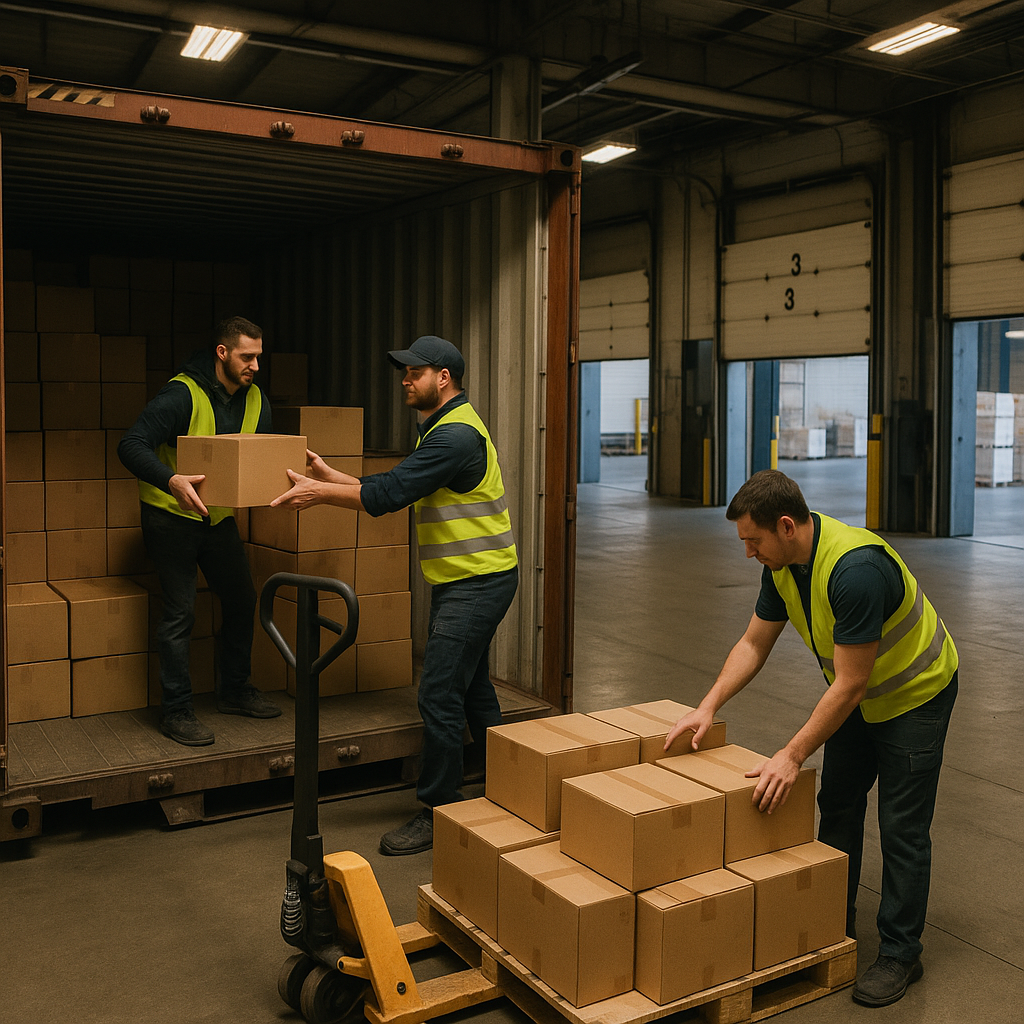
The Reality of Modern Container Unloading
Warehouse teams are under constant pressure to move goods faster while maintaining accuracy. One of the biggest friction points is container unloading, especially when dealing with floor-loaded shipments and mixed SKUs. Unlike palletized freight, these containers require manual handling, product sorting, and immediate decision-making on where items should go next.
Delays at this stage can ripple through the entire operation. When containers sit at the dock too long, labor gets tied up, inbound schedules slip, and downstream processes like putaway and order picking are disrupted.
Challenges with Mixed SKUs and Floor-Loaded Freight
Mixed SKU containers create complexity because items are not grouped by destination or storage location. Workers must identify, sort, and sometimes re-palletize products on the fly. This increases handling time and raises the risk of errors, especially when labeling is inconsistent or documentation is unclear.
Floor-loaded containers add another layer of difficulty. Without pallets, every case must be manually handled, often in tight and physically demanding conditions. This slows throughput and increases fatigue, which can lead to mistakes and safety concerns.
Operational Bottlenecks and Inefficiencies
Many warehouses struggle with bottlenecks at the dock because unloading processes are not standardized. Teams may lack clear workflows for sorting, staging, and routing incoming goods. In some cases, there is limited space to stage items, forcing repeated handling as workers try to keep areas clear.
Another common issue is poor coordination between inbound scheduling and labor planning. When multiple containers arrive at once without adequate staffing, queues form quickly. Conversely, overstaffing during slow periods leads to wasted labor costs.
Strategies for Faster, More Accurate Unloading
Improving container unloading starts with better planning and visibility. Pre-receiving data, such as advanced shipping notices, allows teams to prepare for incoming SKUs and allocate space accordingly. Standardized unloading procedures help ensure consistency, even when dealing with complex shipments.
Investing in equipment such as conveyor systems or extendable belt unloaders can significantly reduce manual handling. Designated sorting zones near the dock can streamline the transition from unloading to putaway. Additionally, cross-training staff enables more flexible labor allocation during peak periods.
Ultimately, efficient container unloading is about reducing touches, improving flow, and minimizing delays. By addressing these core challenges, warehouse operations can increase throughput, improve accuracy, and create a safer working environment.
 English (Canada)
  Français du Canada