
Most warehouses don’t fail because of a single catastrophic breakdown. They fail slowly, through a series of small, recurring equipment issues that never seem serious enough to trigger escalation. A lift truck that’s down for 40 minutes. A stretch wrapper that jams twice per shift. A conveyor photo eye that needs constant resetting. Individually, these feel manageable. Collectively, they quietly choke your throughput.
The real problem isn’t that equipment fails—it’s how those failures are absorbed into daily operations without being properly accounted for. Over time, downtime becomes normalized. Teams work around it. Supervisors adjust labor on the fly. And leadership never sees the true cost because the operation “still gets the work out”… until it doesn’t.
The hidden math of small failures
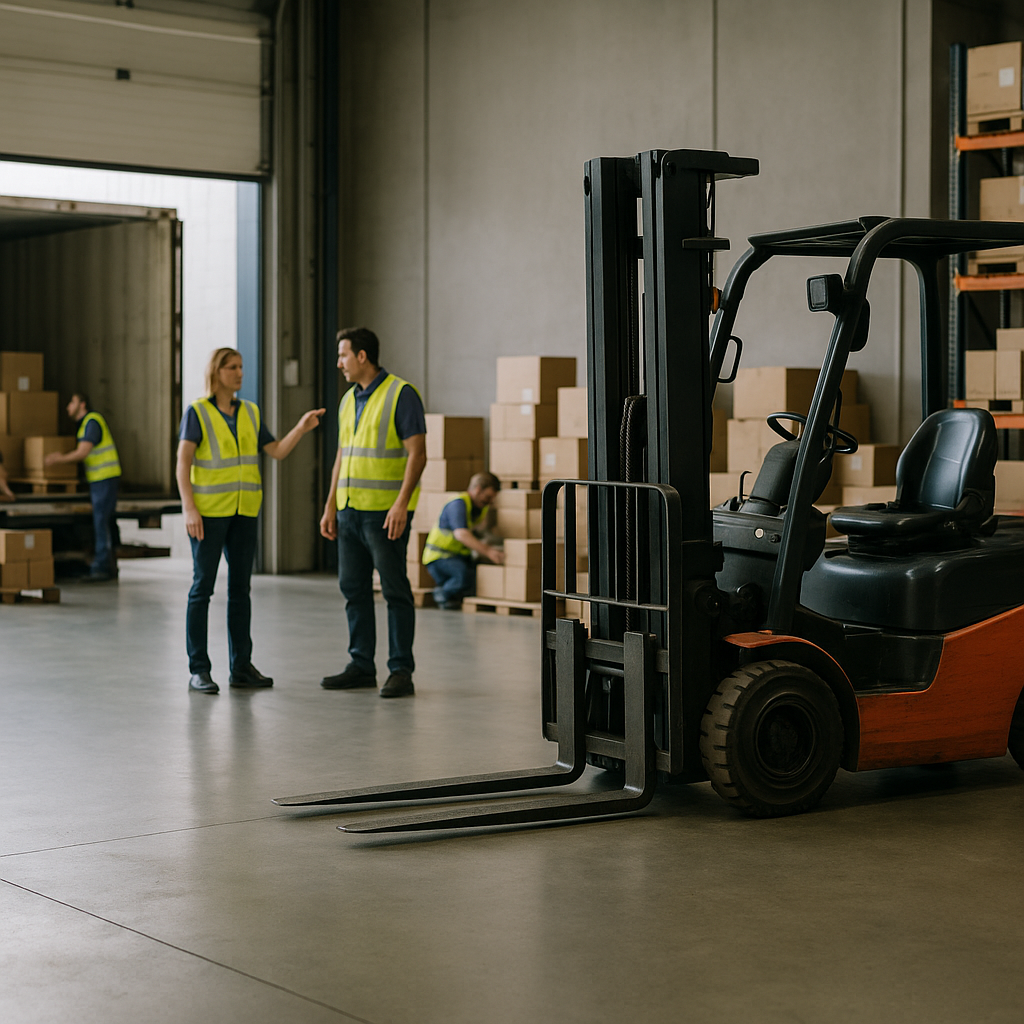
Let’s take a common scenario: a distribution center running 25 forklifts across two shifts. On paper, that’s more than enough capacity to support inbound, replenishment, and picking. But in reality, each truck averages about 45 minutes of downtime per shift due to battery swaps, minor repairs, or waiting on maintenance.
That’s 18.75 lost labor hours per day—essentially the equivalent of two full-time operators disappearing from your plan. Yet most labor plans still assume full availability. The result? Supervisors constantly feel understaffed, even when headcount looks sufficient.
Instead of addressing the root cause, operations typically compensate by pushing workers harder, delaying breaks, or borrowing labor from other areas. It works temporarily, but it introduces new problems: fatigue, errors, and uneven workload distribution.
Downtime doesn’t stay in one department
Equipment issues rarely stay contained. A failed pallet jack in receiving slows unloading, which delays putaway, which starves pick locations, which forces selectors to wait or substitute SKUs. What started as a minor mechanical issue turns into a full operational ripple.
One facility experienced recurring conveyor stoppages in its sortation area—nothing dramatic, just frequent resets due to sensor misalignment. Each stoppage lasted 3–5 minutes. It didn’t sound like much until someone tracked it over a full shift: 22 stoppages, totaling nearly 90 minutes of lost flow.
Upstream, picking teams began staging product faster than it could be sorted. Downstream, shipping lanes became congested. Trailers were delayed not because picking was slow, but because the system couldn’t sustain flow. Leadership initially blamed labor productivity before realizing the bottleneck was mechanical.
The normalization trap
One of the most dangerous patterns in warehouse operations is normalization. If a stretch wrapper jams every day at 3 p.m., teams stop reporting it as an issue—they plan around it. If a dock door takes 10 minutes longer to open due to mechanical wear, schedulers quietly pad appointment times instead of fixing the door.
This creates a false sense of stability. KPIs may look acceptable because expectations have been lowered to match reality. But the operation is running below its true capacity, often by a significant margin.
Worse, when volume spikes or labor tightens, there’s no buffer left. The inefficiencies that were once absorbed suddenly become visible—and painful.
Maintenance is often reactive, not strategic
In many facilities, maintenance teams are highly skilled but perpetually reactive. Their day is driven by radio calls and urgent fixes rather than planned work. Preventive maintenance schedules exist, but they’re frequently postponed to keep operations running.
This creates a cycle: equipment degrades, failures increase, and maintenance becomes even more reactive. Over time, mean time between failures shrinks, and the operation becomes more fragile.
One warehouse tracked its maintenance activity and found that over 70% of work orders were unplanned. That meant most of their effort was spent responding to problems rather than preventing them. Not surprisingly, downtime kept increasing despite constant maintenance activity.
The disconnect between operations and maintenance
Another common issue is misalignment between operations and maintenance priorities. Operations teams want maximum uptime during peak hours. Maintenance teams need downtime windows to perform proper repairs and preventive work.
Without coordination, maintenance gets pushed into off-hours or rushed jobs. Quick fixes replace permanent solutions. Equipment returns to service faster—but fails again sooner.
In one case, a facility repeatedly patched a conveyor belt issue with temporary splices because there was never “time” for a full replacement. Over six months, those quick fixes added up to more downtime than a single planned repair would have required.
Visibility changes behavior
The turning point for most operations comes when downtime is measured accurately and made visible. Not just major breakdowns, but all interruptions—no matter how small.
When teams start tracking downtime by equipment type, duration, and frequency, patterns emerge quickly. The “random” issues usually aren’t random at all. They cluster around specific assets, shifts, or usage patterns.
One site introduced simple downtime logging for lift trucks and discovered that a handful of units accounted for a disproportionate share of issues. Replacing just those trucks improved overall availability more than adding new equipment would have.
Designing for reliability, not just capacity
Many operations focus heavily on capacity planning—how many units per hour, how many picks per shift. But capacity is meaningless if the equipment supporting it isn’t reliable.
Designing for reliability means building realistic availability assumptions into your plans. It means acknowledging that equipment will fail and planning accordingly, rather than assuming perfect conditions.
It also means investing in redundancy where it matters most. Not every asset needs a backup, but critical bottlenecks—like sortation systems or key dock doors—should never be single points of failure.
What effective operations do differently
Facilities that manage equipment downtime well tend to share a few characteristics. They treat downtime as a performance metric, not an unavoidable nuisance. They align operations and maintenance through shared goals, not competing priorities. And they make deliberate decisions about when to stop and fix something properly instead of constantly working around it.
They also empower supervisors to escalate recurring issues without friction. If the same problem appears three days in a row, it’s no longer a minor inconvenience—it’s a systemic issue that needs attention.
Perhaps most importantly, they resist the temptation to “hero through” problems. Just because a team can work around a broken process doesn’t mean they should. Every workaround has a cost, even if it’s not immediately visible.
The real cost of ignoring downtime
Unchecked equipment downtime doesn’t just reduce throughput. It distorts labor planning, increases safety risks, and erodes morale. Operators get frustrated working with unreliable tools. Supervisors spend more time firefighting than managing. And leadership ends up making decisions based on incomplete data.
Over time, the operation becomes less predictable. And in logistics, unpredictability is expensive.
The irony is that many of these issues are fixable—not with massive capital investment, but with better visibility, coordination, and discipline. The challenge isn’t knowing that downtime matters. It’s recognizing how much it’s already shaping your operation, quietly and consistently, every single day.
 English (Canada)
  Français du Canada