It’s a familiar scene: a container arrives, the schedule says it should take two hours, and four hours later it’s still not empty. Meanwhile, inbound lanes clog up, outbound staging gets squeezed, and supervisors start reshuffling labor on the fly. The issue isn’t the container itself—it’s the way unloading work is structured, or more often, unstructured. For many warehouses, container unloading is treated as a variable task when it actually demands a repeatable, disciplined process.
This isn’t just about speed. Poorly managed unloading creates ripple effects across receiving, putaway, and even order fulfillment. The real problem is inconsistency—different crews, different methods, different results. Over time, that inconsistency becomes baked into daily operations, making performance unpredictable and difficult to improve.
The variability trap on the receiving dock
Not all containers are equal, but too many operations treat them as if they are. A floor-loaded container of mixed SKUs behaves very differently from palletized freight, yet both are often assigned similar expectations and labor planning. This mismatch creates a cycle where teams are either under-resourced and fall behind, or over-resourced and waste labor hours.
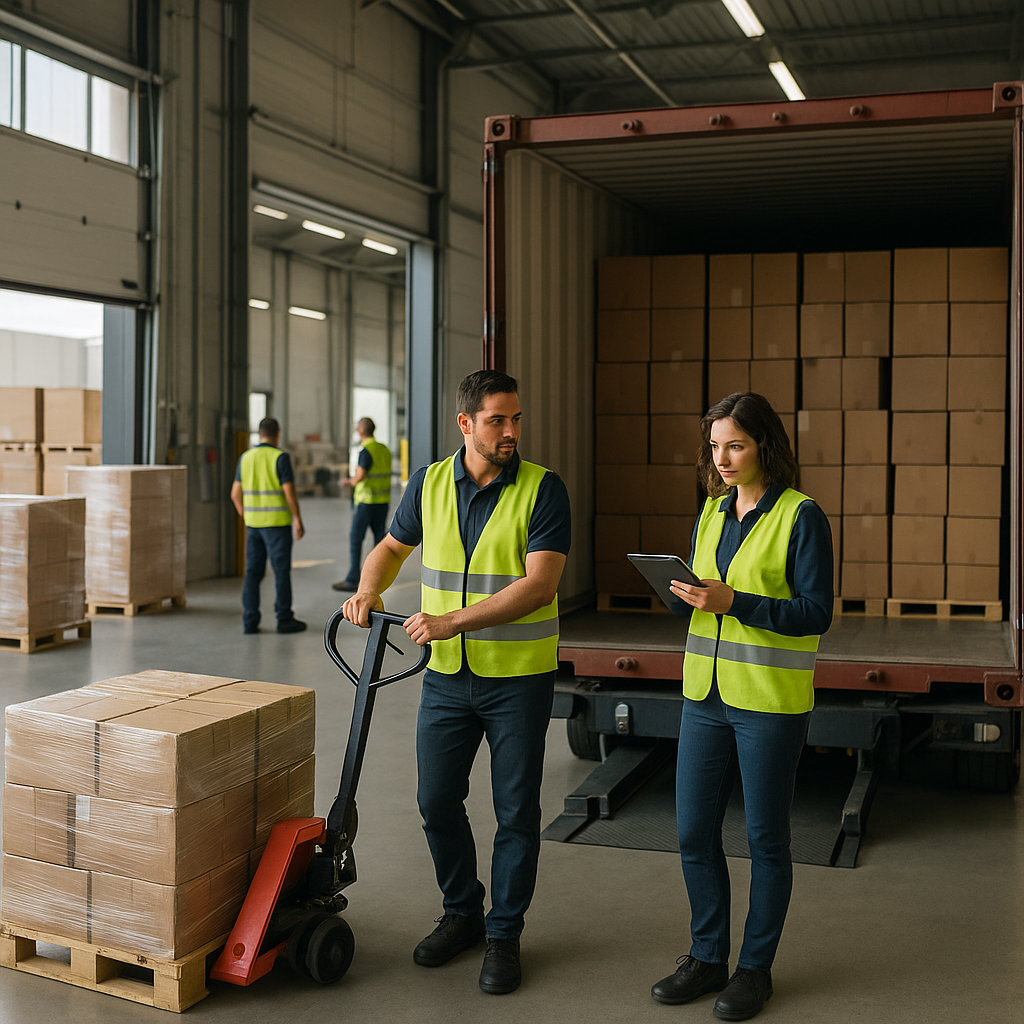
Consider a typical morning shift: three containers arrive back-to-back. One is neatly palletized, one is partially slip-sheeted, and the third is a tightly packed floor load with irregular cartons. Without a structured intake assessment, supervisors assign crews based on availability rather than need. The palletized container is cleared quickly, leaving workers idle, while the floor-loaded container drags on, tying up labor and dock doors.
This variability isn’t just inconvenient—it disrupts the entire warehouse rhythm. Downstream teams either wait for product or get flooded with it all at once, neither of which supports efficient operations.
Why “just add more people” doesn’t work
When unloading falls behind, the instinct is to throw more labor at the problem. Sometimes that helps in the moment, but it rarely solves the underlying issue. In fact, overcrowding a container can reduce efficiency. Workers get in each other’s way, communication breaks down, and the pace becomes uneven.
There’s also the problem of diminishing returns. Adding a fifth or sixth person to a container doesn’t double productivity—it often creates confusion about roles and slows decision-making. Without clear task segmentation, more hands can mean less output.
A better approach is to define specific roles within the unloading process. Who is breaking down the load? Who is staging product? Who is scanning or verifying? When each person has a clear function, productivity becomes more predictable and scalable.
The hidden cost of inconsistent unloading methods
Walk through most warehouses and you’ll see multiple unloading styles in play. One team uses a conveyor, another hand-stacks onto pallets, another builds mixed pallets on the fly. While each method may work in isolation, the lack of standardization creates inefficiencies that add up over time.
For example, a team that prioritizes speed might offload cartons quickly but create poorly built pallets that slow down putaway. Another team might focus on neat pallet builds but take twice as long to unload. Without alignment on priorities, the operation shifts problems from one area to another instead of solving them.
This inconsistency also makes performance measurement difficult. If every container is handled differently, it’s nearly impossible to establish accurate benchmarks or identify areas for improvement.
What high-performing docks do differently
Warehouses that consistently handle container unloading well tend to share a few key traits. First, they treat unloading as a defined process, not an ad hoc task. Every container goes through a quick assessment on arrival—type of load, carton condition, SKU mix, and any special handling requirements. This information drives labor allocation and method selection.
Second, they standardize their approach. That doesn’t mean every container is handled identically, but there are clear guidelines for when to use certain methods. For instance, floor-loaded containers might always use a conveyor and a three-person team with defined roles, while palletized loads follow a different, equally structured process.
Third, they integrate unloading with downstream operations. Instead of simply emptying a container as fast as possible, they consider how product will flow into receiving, quality checks, and putaway. This reduces bottlenecks and ensures a smoother overall operation.
A real-world shift: from reactive to controlled
One mid-sized distribution center struggled with chronic unloading delays. Containers routinely exceeded expected times, and labor costs were climbing. The turning point came when they stopped treating each container as a unique challenge and started applying a consistent framework.
They introduced a simple intake checklist for every container, categorized loads into three types, and assigned predefined labor configurations to each category. They also trained teams on specific unloading methods and established clear expectations for pallet quality and staging.
The result wasn’t just faster unloading times—though those improved significantly. The bigger impact was stability. Supervisors could plan shifts more accurately, downstream teams received product in a more predictable flow, and the need for last-minute labor adjustments dropped sharply.
Where to start if your dock feels unpredictable
If container unloading feels like a daily firefight, the first step isn’t to move faster—it’s to get more consistent. Start by observing how different teams handle similar loads. You’ll likely find wide variations in approach and results.
From there, define a small set of standard methods based on load type. Keep it simple and practical—this isn’t about creating a complex system, but about reducing unnecessary variation. Train teams on these methods and reinforce them through supervision and feedback.
Finally, connect unloading performance to the rest of the warehouse. Measure not just how quickly containers are emptied, but how well the output supports receiving and putaway. This broader view helps ensure that improvements in one area don’t create problems in another.
Container unloading will always have some level of variability—that’s the nature of inbound logistics. But variability doesn’t have to mean unpredictability. With the right structure and discipline, what used to be a daily disruption can become a reliable, controlled part of your operation.
 English (Canada)
  Français du Canada